

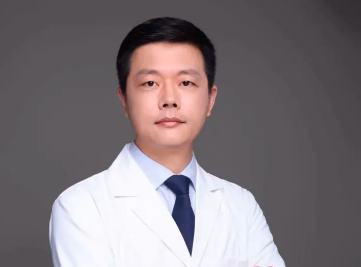
Kong Xiao_Rhinoplasty and Revision Rhinoplasty Expert, Department of Plastic and Cosmetic Surgery, The First Affiliated Hospital of Henan University of Chinese Medicine (孔晓)
Biography
Areas of Expertise
Kong Xiao, Associate Chief Physician in the Department of Plastic and Aesthetic Surgery, the First Affiliated Hospital of Henan University of Chinese Medicine. Specialties: rhinoplasty, revision rhinoplasty, cleft lip repair, nasal deformity repair, and cleft lip/palate-related nasal deformity.
Biography
Kong Xiao, a licensed physician in the Department of Plastic Surgery at the First Affiliated Hospital of Henan University of Chinese Medicine, previously worked in the Department of Plastic Surgery at Zhengzhou People's Hospital and holds the title of associate chief physician. The physician graduated from a renowned medical institution, has participated multiple times in international plastic surgery academic exchange conferences, and has many years of clinical experience. Aesthetic patients choose the physician for treatment, and due to refined treatment techniques, the physician is highly praised by patients and specializes in oculoplastic surgery, rhinoplasty, and facial rejuvenation.
Member of the Rhinoplasty Group, Plastic Surgery Branch, Chinese Medical Association;
Member of the Rhinoplasty Repair Group, Reconstructive Surgery Professional Committee, Chinese Association of Rehabilitation Medicine;
In 2007, while pursuing graduate studies in plastic surgery at Zhengzhou University, the physician received systematic training in regional anatomy and independently completed the project “Clinical Applied Anatomy of External Nose Plastic Surgery,” systematically summarizing clinical applied anatomical data and related materials of the nose and providing a foundational theoretical basis for rhinoplasty in Chinese patients. After commencing clinical work, the physician has focused on integrating nasal anatomy theory with clinical application, as well as teaching, training, and dissemination. The physician has successively participated in three provincial- and municipal-level research fund projects, published more than 10 academic papers in core journals, participated multiple times in major domestic and international academic conferences and delivered presentations on rhinoplasty-related topics, and served as editor-in-chief, chief translator, or co-editor of multiple monographs published by national-level publishers, mainly including: editor-in-chief of China's first rhinoplasty anatomy monograph, Applied Anatomy of Rhinoplasty; chief translator of First Rhinoplasty——Redefining the Logic and Technique by American rhinoplasty master Dr. JOHN B. TEBBETTS; and editor-in-chief of China's first standardized book combining nasal anatomy with surgical procedures, Rhinoplasty Atlas——Applied Anatomy and Surgical Procedures, etc.
Rhinoplasty is a perfect integration of function, aesthetics, and technique. Therefore, my philosophy is to emphasize functional preservation, harmonize aesthetic relationships, and value the rational application of techniques. I reject the assembly-line, “one nose for all” internet-influencer nose.
Regarding function, I emphasize that morphological adjustment must be based on normal nasal function, and one must not focus on one aspect at the expense of the other. Regarding aesthetics, the vast differences in individuals' baseline conditions fundamentally determine that aesthetic design of the nose should be personalized, customized, and globally harmonious (coordination between nasal subunits and the nose as a whole, between the nose and other facial organs and contours, and even consideration of gender, height, temperament, occupation, etc.); therefore, a single aesthetic viewpoint cannot be applied to all aesthetic patients. Regarding technique, I value the application of techniques suited to Chinese nasal anatomical characteristics and surgical intentions, and reject the mindset of completely copying Western surgical concepts.